Current Location: Blog >
Taiwan Server
1. Basic Concept of VPS Server
It is very important to understand the basic concepts of a VPS server before selecting one. VPS (Virtual Private Server) is a virtual private server that can provide users with an independent operating system and resource environment. Compared to shared hosting, VPS offers greater flexibility and control.VPS servers are mainly divided into two types: Servers based on KVM and servers based on OpenVZ. KVM allows users to install any operating system, while OpenVZ is based on a shared Linux kernel.
When selecting a VPS server, factors such as resource allocation, isolation, and security should be considered.
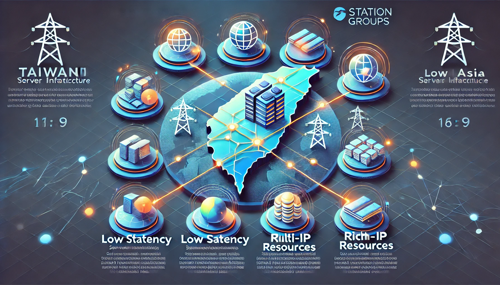
In Taiwan, VPS servers are typically used for scenarios such as website hosting, application development and testing, due to their good bandwidth and geographical advantages.
For example, many Taiwanese companies choose local VPS service providers to ensure the speed and stability of data transmission.
2. How to Choose the Right VPS Service Provider
There are many VPS service providers available in the Taiwan market, here are some suggestions for choosing the right service provider:1. Service Stability: Choose a service provider that offers 99.9% or higher uptime.
2. Customer Service: High-quality customer service will help you resolve issues quickly.
3. Price and Value for Money: Compare the prices and resources provided by different service providers and choose the option with the best cost-effectiveness.
4. Location of Data Center: Choosing a service provider with a local data center can improve access speed.
5. User Reviews and Feedback: Check reviews from other users to learn about the service quality.
3. Configuration Tips for VPS Servers
When configuring a VPS server, you need to choose based on actual requirements. Here are some basic configuration suggestions:1. CPU Configuration: Choose at least a 2-core CPU to ensure processing power.
2. Memory Configuration: In general, at least 2GB of memory is recommended, suitable for most small websites.
3. Storage Space: SSD storage provides faster read and write speeds; it is recommended to use at least a 20GB SSD.
4. Bandwidth: Choose at least 1TB of traffic to ensure the stability of user access.
5. Operating System: Choose the Linux or Windows operating system based on application requirements.
4. Case Study Analysis
Here is a practical case that demonstrates how to select and configure a VPS server:A Taiwanese e-commerce company needs a high-performance website to support its daily transactions. After evaluation, they selected the following configuration:
| Configuration Item | Choose |
|---|---|
| CPU | 4-core |
| Memory | 8GB |
| Storage | 40GB SSD |
| bandwidth | 2TB |
By making the above configurations, the company successfully improved the website's access speed and saw a significant increase in transaction volume.
5. Frequently Asked Questions
When selecting and configuring a VPS server, users often encounter the following issues:What is the difference between a VPS and a shared host?
VPS provides independent resources with stronger performance, while shared hosting involves multiple users sharing resources.
2. Choosing between the Linux or Windows operating system?
Decide based on application requirements; Linux is suitable for developing and deploying Web applications, while Windows is suitable for running specific Windows applications.
How to ensure the security of a VPS server?
Regularly update the system and software, use firewalls and security software.
Can the VPS configuration be upgraded at any time?
Most service providers support online upgrades, but there may be additional charges.
5. What types of businesses are suitable for VPS?
Suitable for small and medium-sized enterprises, development and testing environments, hosted websites and applications, etc.
6. Summary
Choosing the right VPS server is crucial for ensuring the smooth operation of your business. Configure reasonably according to the requirements and choose a reputable service provider, which can help improve your website's performance and user experience. We hope that this article's guide and examples will help you choose a VPS in Taiwan.- Latest articles
- Before Choosing A Hong Kong High-defense Exemption Server, You Need To Pay Attention To Security And Contract Terms
- Experts Recommend Paying Attention To ISP And Routing Issues When Assessing The Speed Of Vietnamese VPS
- Cost Control Tips For Korean CN2 Site Clusters: Bandwidth Billing And Resource Allocation Recommendations
- Common Causes Of Tencent Cloud Singapore Server Failures And Best Practices For Prevention
- Evaluation Of The Capabilities Of Singapore Cloud Server CN2 Service Providers In Supporting Cross-border Business
- Case Study Of Application Of Hong Kong Sha Tin CN2 Console In Game Acceleration And Live Streaming
- Judging From Case Studies Whether US High-defense Servers Are Resistant To Complaints: Complaint Types And Final Handling Results Statistics
- Remote Management Practice: US VPS Windows 2003 Remote Desktop And Permission Configuration Instructions
- Key Points Reflected In The Malaysian Cloud Server Price List Comparing Nodes From Different Regions
- A Guide To Choosing Which Cloud Server To Use In Vietnam To Meet Regulatory Compliance And Data Residency Requirements
- Popular tags
Vpc
Server Services
Line Acceleration
Japanese Vps
Ddos Protection
Reputable High-security Brands
American Cn2 Virtual Host
Lifelong Vps
Market Prospects
IP Lookup Tool
Tcp
Game Host Rental
Ranking
Bandwidth Optimization
Server Price
Quic
Cn2 Routing
Public Ip
High-defense Service
Multiplayer Online
Europe
High-defense Servers In The US
Online Viewing Server
Virtual Private Server
Kt Us Server
Application Skills
Monitoring Dashboard
Security Reinforcement
Arp Attack
Tax-free State
Related Articles
-

Compliance Risk Compliance Suggestions For Taiwan’s Native Residential Ip In Advertising And Risk Control
focusing on the five core compliance issues of taiwan's native residential ip in advertising and risk control, we provide practical suggestions and operational points, covering material copywriting, user data, targeting and platform cooperation, monitoring and emergency response, etc. -

What Are The Features Of Taiwanese Servers That Help Small And Medium-sized Enterprises Build Private Clouds?
From the perspectives of network latency, reliability, compliance, and localization support, this article analyzes how servers located in Taiwan can help small and medium-sized enterprises build and manage private cloud environments in an efficient and cost-effective manner. -

Exploring The Technical Features And Application Areas Of Taiwan's Mosha Server
This article explores the technical features of the Taiwan Mosha server and its wide application in various fields, and recommends the related services of Dexun Telecommunications.